Mortgage Approval
Lender decision that the documented borrower, property, loan program, and transaction satisfy the requirements to proceed.
Mortgage approval is a lender decision that a documented borrower, property, loan program, and transaction satisfy the requirements needed for the loan to proceed at that stage.
Approval is tied to the facts reviewed. It is not a permanent promise that survives every change between application and funding.
Why It Matters
Borrowers often hear several versions of the word approved: preapproved, approved with conditions, finally approved, or clear to close. Those labels do not all represent the same amount of review or the same readiness to fund.
A useful approval answers more than whether the borrower appears able to make the payment. The lender also must be satisfied with the documented income, debts, assets, credit, property, occupancy, loan terms, and transaction structure that support its decision.
The status can change when a material fact changes. New debt, reduced income, unexplained funds, a different property, a low appraisal, unresolved title work, expired documents, or revised loan terms can require another review.
Where It Appears in the Borrower Process
Early in home shopping, a borrower may receive Prequalification or Preapproval. Those are preliminary signals, not approval of a completed property-specific mortgage.
After application and property selection, Underwriting tests the actual file. The lender may issue Conditional Approval, identify one or more Underwriting Conditions, and later move the file to Clear to Close when the required pre-closing items are cleared.
Closing, funding, and recording remain separate events. A lender status that permits document preparation does not itself release loan proceeds or complete the transfer of ownership.
What the Approval Covers
| Approval component | What the lender is evaluating |
|---|---|
| Borrower | Verified income, debts, credit, assets, identity, and occupancy representations |
| Property | Value, condition, eligibility, insurance, title, and project review when applicable |
| Loan | Program rules, loan amount, LTV, pricing, mortgage insurance, and documentation path |
| Transaction | Purchase or refinance terms, source of funds, interested-party contributions, and closing figures |
Approval of one component does not substitute for approval of the others. Strong borrower credit cannot cure an ineligible property, and an acceptable appraisal does not prove that the borrower qualifies.
Typical Approval Path
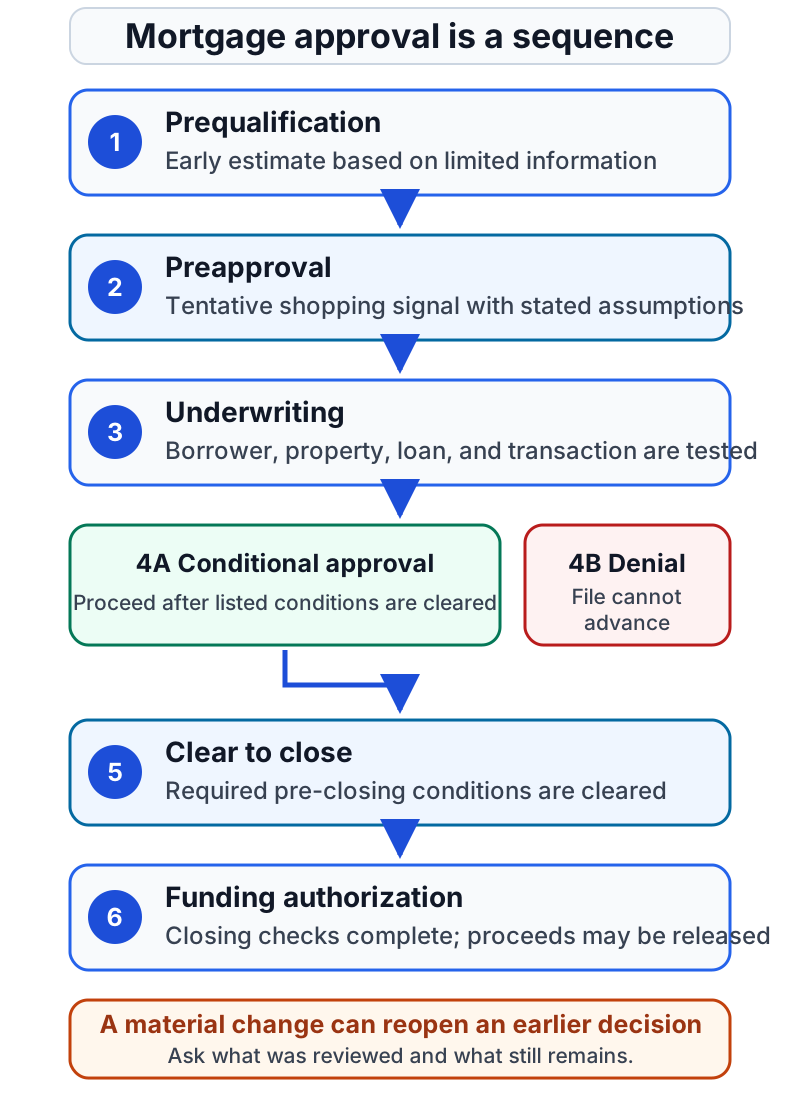
Lenders do not all use identical status names. The practical question is what has been reviewed, which conditions remain, and whether the lender is authorizing closing preparation or the later release of funds.
What Can Reopen the Decision
| File change | Why another review may be needed |
|---|---|
| New credit or higher balances | Monthly obligations and credit risk may have changed |
| Job, income, or leave change | The qualifying income may no longer match the approved file |
| Large deposit or moved closing funds | Ownership, source, and availability may need to be traced |
| Revised price, loan amount, or loan program | Leverage, cash needed, pricing, and eligibility may change |
| Appraisal, title, insurance, or property issue | The collateral or lien position may no longer meet requirements |
| Delayed closing | Time-sensitive documents and verifications may expire |
Borrowers should continue preserving records and avoiding avoidable financial changes until funding is confirmed.
Practical Example
Jordan is preapproved before making an offer. After the contract is signed, the lender underwrites Jordan’s income, assets, credit, appraisal, title, and insurance. It issues conditional approval subject to an updated bank statement and proof that one debt was paid as represented.
The underwriter accepts both responses and marks the file clear to close. Jordan is much further along than at preapproval, but the loan is not complete until the closing documents are accepted and the lender authorizes funding.
How It Differs From Nearby Terms
Mortgage approval differs from Preapproval because preapproval is an early assessment based on assumptions and a still-incomplete transaction. Mortgage approval refers to a lender decision on the active documented file.
It differs from Conditional Approval because conditional approval is one form of approval with unresolved requirements.
It differs from Clear to Close because clear to close is a late operational status indicating that required pre-closing underwriting conditions have been cleared. Lenders may use final approval and clear to close differently, so the remaining steps should be confirmed rather than inferred from the label alone.
It differs from Funding Authorization because funding authorization is the later permission to release loan proceeds after required closing and prefunding checks.
Related Terms
- Preapproval
- Underwriting
- Conditional Approval
- Underwriting Condition
- Conditions to Close
- Clear to Close
- Prior-to-Funding Conditions
- Loan Denial
Knowledge Check
- Does mortgage approval apply regardless of later changes to the file? No. Approval is based on the documented borrower, property, loan, and transaction facts the lender reviewed.
- Is an acceptable appraisal enough to establish mortgage approval? No. The property is only one component; borrower qualification and the full transaction also must satisfy the lender.
- Does clear to close mean the lender has already released the loan proceeds? No. Clear to close is a late readiness status, while funding authorization and release occur later.