Automated Underwriting System (AUS)
Mortgage software that evaluates submitted loan data and returns risk, eligibility, and documentation messages.
An automated underwriting system, or AUS, is mortgage software that evaluates submitted application and credit data and returns a system-specific assessment, eligibility result, and documentation messages.
For conventional mortgages, the two best-known systems are Fannie Mae’s Desktop Underwriter (DU) and Freddie Mac’s Loan Product Advisor (LPA). Government-backed programs can also use approved automated underwriting paths with program-specific rules.
Why It Matters
AUS turns a large set of borrower and loan data into a standardized first assessment. It can identify whether a file appears to fit the selected channel, what must be documented, and whether the lender should follow an automated or manual review path.
The result is influential but not final. AUS evaluates the information submitted to it; it does not verify that the paystub, bank statement, appraisal, occupancy, or loan terms are accurate. It also does not replace the lender’s responsibility to comply with law, apply overlays, investigate contradictions, and make the actual credit decision.
That distinction explains how a borrower can hear “the AUS approved it” and still receive conditions, a changed result, or a denial later. The favorable result was based on a data snapshot that still had to be proven.
Where It Appears in the Borrower Process
The lender may run AUS during preapproval, after a property is selected, during formal underwriting, and again before closing if material information changes. Each submission uses data such as income, assets, liabilities, credit history, occupancy, property, loan amount, rate, and mortgage product.
The system output helps the lender plan documentation and review. An underwriter then compares the submitted data with the actual file. If those do not match, the lender may correct the casefile and complete an AUS Resubmission.
From Data to a Lender Decision
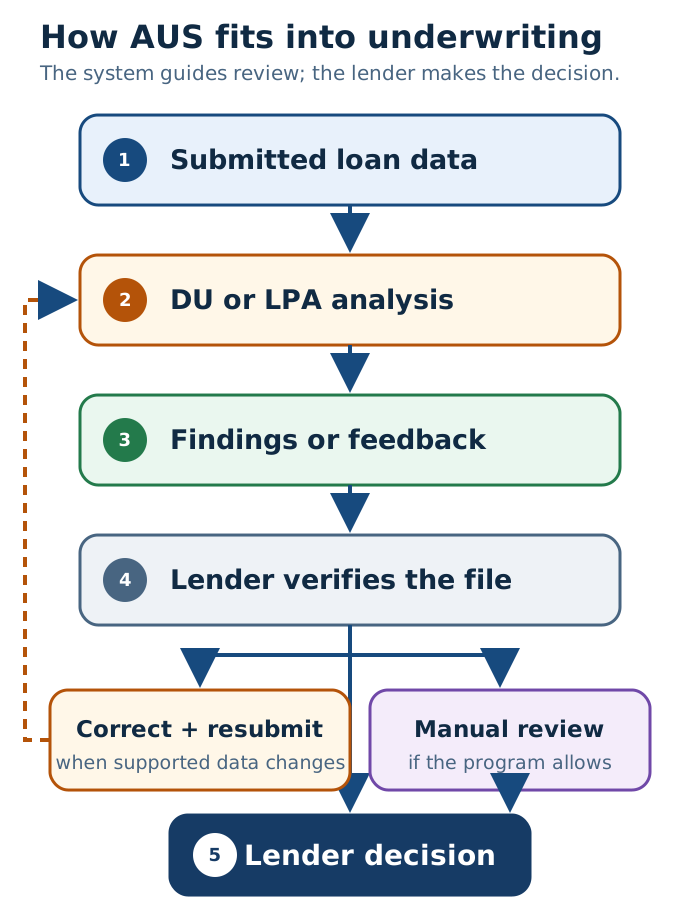
An AUS result is a checkpoint between application data and the lender’s decision. It is not the decision itself.
Inputs and Outputs
| AUS uses submitted data about | AUS may return |
|---|---|
| borrower identity and credit | risk assessment or recommendation |
| income, employment, assets, and debts | documentation and verification messages |
| property, occupancy, and transaction | product or purchase eligibility information |
| loan amount, rate, term, and purpose | warnings, calculation messages, or required corrections |
Different systems label these outputs differently. DU may return Approve/Eligible, Approve/Ineligible, Refer with Caution, or another defined recommendation. LPA reports an Accept or Caution risk class and separately shows purchase eligibility on its feedback certificate.
Practical Example
A buyer applies for a conventional mortgage. The lender submits the borrower’s income, assets, debts, credit report, property details, and proposed terms to an AUS. The result is favorable and lists the documents needed to support the data.
The underwriter later finds that bonus income was entered at a higher amount than the documents support. The lender corrects the income and reruns the system. The recommendation may remain favorable, add conditions, or change because the second submission reflects different qualifying income.
How It Differs From Nearby Terms
Underwriting is the entire lender review process. AUS is one tool used inside that process.
Desktop Underwriter is Fannie Mae’s AUS, while Loan Product Advisor is Freddie Mac’s AUS. Their labels should not be mixed: Approve/Eligible belongs to DU; Accept and Caution are LPA risk classes.
AUS findings are the detailed output from a run. A summary recommendation without the accompanying messages does not tell the lender what must be verified.
Manual underwriting applies direct human analysis under the chosen program’s manual rules. It is not automatically available for every loan that lacks a favorable automated result.
Conditional approval is a lender status after review. A favorable AUS result can support conditional approval, but the terms are not synonyms.
Related Terms
- Desktop Underwriter (DU)
- Loan Product Advisor (LPA)
- AUS Findings
- AUS Resubmission
- Approve/Eligible
- Accept Risk Class
- Manual Underwriting
- Conditional Approval
Knowledge Check
- Does a favorable AUS result mean the lender has verified the file? No. The result is based on submitted data; the lender must confirm the data with documents and complete its own review.
- Why can an AUS result change before closing? Corrected income, new debt, a different property value, revised terms, or another material change can alter the system’s assessment and messages.
- Are DU and LPA result labels interchangeable? No. DU and LPA are different systems with different recommendation and eligibility labels.