Chain of Title
The sequence of recorded ownership transfers used to trace how the current seller obtained title to a property.
The chain of title is the sequence of ownership transfers used to trace how the current owner obtained title to a property.
The chain is built from deeds, probate records, court orders, and other relevant title evidence. It is not a literal chain or one government-issued certificate.
Why It Matters
A seller can transfer only the ownership interest the seller actually holds. The title provider therefore traces prior conveyances to see whether the current vesting follows a coherent sequence. A missing deed, inconsistent legal description, name mismatch, unauthorized signature, or unresolved estate can create a break or question in that sequence.
Chain-of-title review is separate from borrower qualification. A buyer may have excellent credit and final loan approval while the property still has an ownership problem that prevents the lender from accepting it as collateral.
The chain also does not show every fact that can affect a property. A complete title examination considers liens, easements, restrictions, judgments, taxes, and other recorded matters in addition to ownership transfers. A survey or owner statement may reveal relevant facts not apparent from a deed sequence alone.
Where It Appears in the Borrower Process
The chain is examined during the Title Search, usually after a purchase contract or refinance application begins. The title provider compares names, dates, legal descriptions, recording references, and the type of interest conveyed.
If the sequence supports the current seller’s ownership, the Title Commitment identifies current vesting and the interest proposed for insurance. If the sequence contains a problem, the commitment may list a Title Requirement for corrective documents or other evidence.
Near closing, an updated search checks for newly recorded matters. The new deed is then recorded so the buyer’s acquisition becomes part of the public record and the next link in the chain.
From Prior Owners to the Buyer
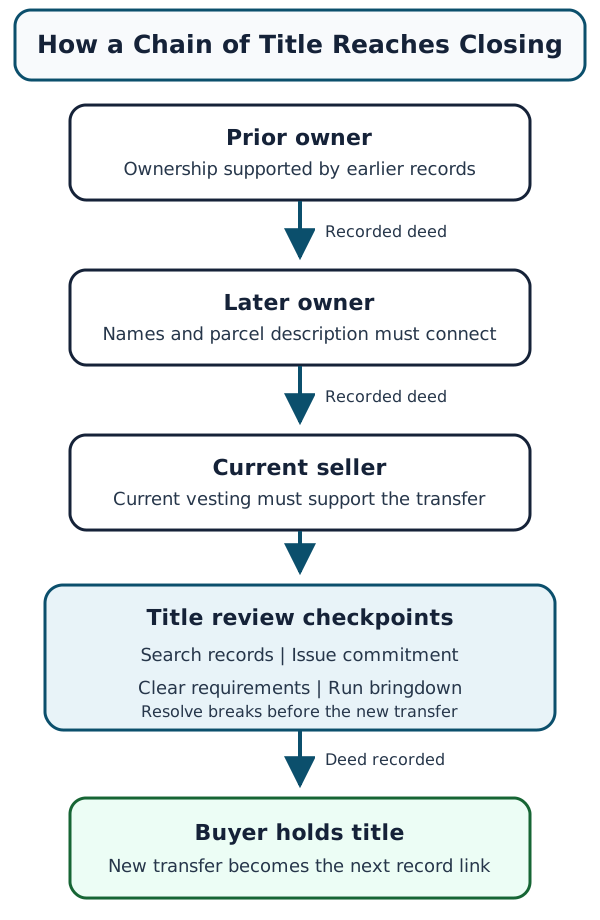
The diagram is simplified. Real title work may rely on multiple record systems and additional evidence, and recording a document does not automatically make every legal defect disappear.
What Reviewers Compare
| Record detail | Why it matters |
|---|---|
| Grantor and grantee names | Connects the transferring owner with the receiving owner |
| Legal description | Confirms that each instrument concerns the same parcel or interest |
| Recording date and reference | Places the instrument in the public record sequence |
| Type of deed or order | Shows the instrument used to transfer or establish the interest |
| Signatures and authority | Helps determine whether the transfer was properly authorized |
| Current vesting | Identifies who appears to hold the interest before the new closing |
Practical Example
The record shows that Maria bought a home in 2009, transferred it to a family trust in 2018, and later signed the purchase contract individually. The title search must determine whether the trust still holds title and who has authority to sign the deed.
If the trust remains the owner, the closing documents must reflect the correct grantor and authorized signer. The issue is not solved merely by using Maria’s personal name on a new deed. The title provider may require trust documentation or another corrective step before issuing the final policies.
How It Differs From Nearby Terms
The chain of title differs from Title. Title is the ownership interest; the chain is the historical transfer sequence supporting the current owner’s claim.
It differs from a title search. The chain is evidence being traced, while the search is the broader process used to examine ownership and other public-record matters.
It also differs from Recording. Recording places a document into public records. The chain is the sequence formed by relevant transfers and evidence over time.
Related Terms
Knowledge Check
- Is the chain of title the same as the title search? No. The chain is the ownership-transfer sequence; the title search is the broader examination process.
- Why can a break in the chain delay an otherwise approved mortgage? The lender still needs evidence that the seller can transfer an acceptable ownership interest.
- Does recording a new deed automatically cure every earlier defect? No. A new recording does not necessarily fix missing authority, an incorrect grantor, or another defect in an earlier transfer.