Property Tax Bill
Official statement of property taxes due, used for mortgage qualification, closing adjustments, and escrow servicing.
A property tax bill is the official statement showing property taxes charged to a parcel, the period covered, amounts due, and payment deadlines.
The bill may combine charges from more than one taxing authority or show separate installments. Its exact format and calculation depend on local law, but its mortgage role is consistent: it documents a housing cost that affects qualification, closing, escrow, and servicing.
Why It Matters
A property tax bill matters because property taxes are part of the real cost of owning the home even though they are not interest or principal on the mortgage. Lenders use tax information to estimate PITI, calculate the proposed housing payment, set up escrow, and confirm that prior taxes will not remain unresolved at closing.
The latest bill is not always a reliable forecast of the buyer’s future bill. A change in ownership, new assessment, expired Property Tax Abatement, seller-specific exemption, special assessment, or supplemental charge can change the amount after closing.
What to Check on the Bill
| Bill item | Mortgage relevance |
|---|---|
| Parcel or tax account | Confirms that the bill belongs to the financed property |
| Tax period | Shows which ownership period and fiscal cycle the charge covers |
| Assessed or taxable value | Helps explain the value basis used by the tax authority |
| Exemptions, abatements, or credits | May explain why the current bill is lower than an unreduced estimate |
| Installment and due dates | Drive proration, escrow funding, and servicer disbursement timing |
| Delinquency, penalty, or prior balance | May require resolution before or through closing |
Where It Appears in the Borrower Process
Borrowers encounter property-tax review during application, closing, escrow setup, and later servicing. The lender or settlement agent may use the bill to calculate Tax Proration, Prepaid Property Taxes, or the Initial Escrow Deposit.
After closing, the servicer uses bills and projected due dates to plan Escrow Disbursement. A later bill change can produce a higher or lower Monthly Escrow Payment after escrow analysis.
From Tax Record to Mortgage Payment
The bill connects a local tax calculation to the lender’s closing estimate and the servicer’s later payment process.
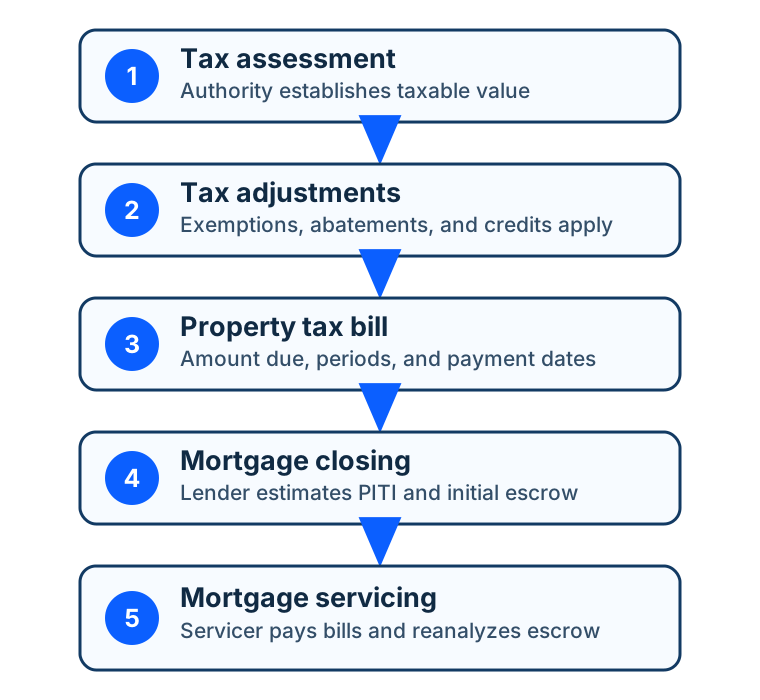
The diagram is a general workflow, not a universal tax formula. Local authorities decide how assessed value, tax rates, exemptions, abatements, and separate levies produce the final amount.
Practical Example
A buyer’s lender receives a bill showing $5,400 due in two $2,700 installments. One installment was paid before closing and the second is due four months later. The settlement agent uses the applicable local proration method, while the lender seeds the escrow account so the servicer can make the later payment when due.
The buyer also confirms that a reduction on the seller’s bill will continue. If it will not, the lender and buyer need a more realistic future-tax estimate.
How It Differs From Nearby Terms
A property tax bill differs from Property Taxes because property taxes are the recurring legal obligation, while the bill is the specific statement issued for a period.
It differs from Property Tax Assessment because assessment is the value-setting process. The bill applies the jurisdiction’s calculation and adjustments to show an amount due.
It differs from a Property Tax Certificate because a certificate or tax-status report confirms tax information for a transaction. The bill is the payment demand itself.
It also differs from a Supplemental Property Tax Bill because a supplemental bill is an additional or adjusted charge that may arrive outside the regular cycle.
Related Terms
- Property Taxes
- Property Tax Assessment
- Property Tax Abatement
- Property Tax Escrow
- Tax Proration
- Supplemental Property Tax Bill
- Tax Installment
- Tax Collector
Knowledge Check
- Why does a lender care about the property tax bill? It helps estimate escrow, PITI, prorations, and whether taxes must be paid at closing.
- Is the tax bill the same as the property tax assessment? No. The assessment helps determine value; the bill shows the amount due.
- Why might the seller’s current bill be a weak forecast for the buyer? Ownership changes, expiring benefits, reassessment, or supplemental charges can change the future amount.