Refinance Funding
The lender's release of replacement-loan proceeds after closing requirements and any applicable cancellation period are satisfied.
Refinance funding is the lender’s release of replacement-loan proceeds after closing requirements and any applicable cancellation period are satisfied.
Signing the refinance documents authorizes the new obligation, but signing and funding are not always the same event.
Why It Matters
The existing mortgage continues to accrue interest and remains unpaid until refinance proceeds are disbursed to its servicer. Cash-out money is not available merely because the borrower signed. The lender and settlement provider still must confirm funding conditions, funds, cancellation timing, and closing instructions.
For many refinances secured by a borrower’s principal dwelling, federal law provides a three-business-day Right of Rescission after consummation and delivery of the required disclosures and notices. Disbursement generally waits until that right expires. Exceptions exist, so borrowers should use the notice delivered for their transaction rather than assume every refinance has the same timing.
Funding timing affects payoff interest, rate-lock expiration, cash-out availability, and the transition to the new loan. A delay can require an updated payoff or additional per-diem interest.
Where It Appears in the Borrower Process
After underwriting and title conditions are cleared, the borrower receives the Refinance Closing Disclosure and signs the closing documents. The lender then reviews the signed package and any final funding conditions.
When rescission applies, the settlement provider waits for the cancellation period to expire without a valid cancellation. The lender then gives funding authorization and sends or makes loan proceeds available under the closing instructions.
The settlement provider allocates those proceeds through Refinance Disbursement. Recording and payoff-release follow-up occur according to the jurisdiction and closing model.
From Signing to Completion
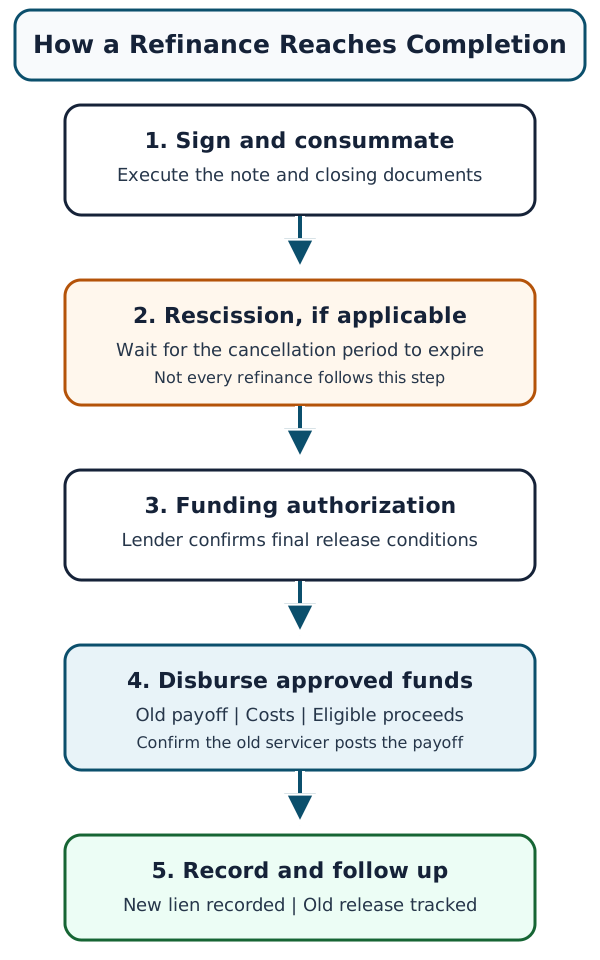
The order and timing can vary. Some transactions do not have a rescission period, and local practice may coordinate funding, disbursement, and recording differently.
Milestones to Distinguish
| Milestone | What has happened |
|---|---|
| Consummation or signing | The borrower becomes contractually obligated under applicable law |
| Rescission expiration, if applicable | The cancellation window ends without a valid cancellation |
| Funding authorization | The lender confirms that proceeds may be released |
| Disbursement | The settlement provider sends funds to approved recipients |
| Payoff posting | The old servicer applies enough funds to retire the existing loan |
| Recording | The new security instrument enters the public records |
What Can Still Stop Funding
An unsigned or incorrectly signed document, expired payoff, changed employment, new credit, missing insurance evidence, unresolved title condition, or mismatch between approved and closing terms can prevent funding authorization. The lender may require a correction or return the file to underwriting.
Borrowers should continue treating the file as active until funding is confirmed. A completed signing appointment does not make last-minute borrowing, job, ownership, or transaction changes irrelevant.
Practical Example
Assume a principal-dwelling refinance has an applicable rescission period. The borrower signs on Monday and receives all required disclosures and cancellation notices that day. With no legal holiday, the rescission period expires at midnight Thursday under the applicable business-day count.
The lender authorizes funding Friday. The settlement provider sends the old-loan payoff and other approved disbursements. The borrower should continue monitoring both loans until the old servicer confirms payoff and the new servicer provides the new payment information.
How It Differs From Nearby Terms
Refinance funding differs from Refinance Disbursement. Funding releases or authorizes the new loan money; disbursement sends specified amounts to the old servicer, closing providers, and borrower.
It differs from Refinance Recording. Funding concerns money; recording concerns public documents and lien notice.
It also differs from the Refinance Funding Date, which is the actual date assigned to the funding event for a particular transaction.
Related Terms
- Funding
- Refinance Funding Date
- Right of Rescission
- Refinance Disbursement
- Refinance Recording
- Refinance Payoff
- Cash-Out Proceeds
- Refinance Closing Disclosure
Knowledge Check
- Is a refinance necessarily funded when the borrower signs? No. Final conditions and any applicable rescission period may still remain.
- Why can a funding delay change the payoff? The existing mortgage continues to accrue interest until enough funds reach the old servicer.
- Is funding the same as recording? No. Funding releases money; recording places the new security instrument in public records.