ARM Reset
The point when an adjustable-rate mortgage is reviewed under its formula and the new rate may change the payment.
ARM reset is the point when an adjustable-rate mortgage is reviewed under its contract formula and the interest rate may change for the next period.
Why It Matters
ARM reset matters because this is when the borrower stops dealing with the ARM as a hypothetical future risk and starts seeing the actual rate-and-payment consequences.
It also matters because many borrowers hear separate ARM terms like index, margin, cap, and fixed period without seeing how they come together. The reset is the event that ties those concepts into one borrower-facing outcome.
Where It Appears in the Borrower Process
Borrowers usually think about ARM reset while comparing adjustable-rate loans with fixed-rate alternatives or while deciding whether to refinance or sell before the first reset arrives.
The term becomes most practical near the end of the Initial Fixed-Rate Period, when the borrower wants to know how the next rate is determined and how large the payment change could be.
It becomes even more concrete once the borrower receives an ARM Adjustment Notice showing the actual new rate and payment that resulted from the reset.
What Shapes an ARM Reset
| ARM piece | What it does at reset |
|---|---|
| Index Rate | Supplies the outside benchmark feeding the reset formula |
| Margin | Adds the contract-specific spread to that benchmark |
| Fully Indexed Rate | Shows the formula result the loan may move toward |
| Rate Cap | Limits how much the new rate can rise at that reset or over time |
| Rate Floor | Limits how low the new rate can fall |
| Adjustment Period | Tells the borrower how often future resets can happen |
| ARM Adjustment Notice | Shows the borrower the actual rate and payment change produced by that reset |
How the Reset Becomes a Payment
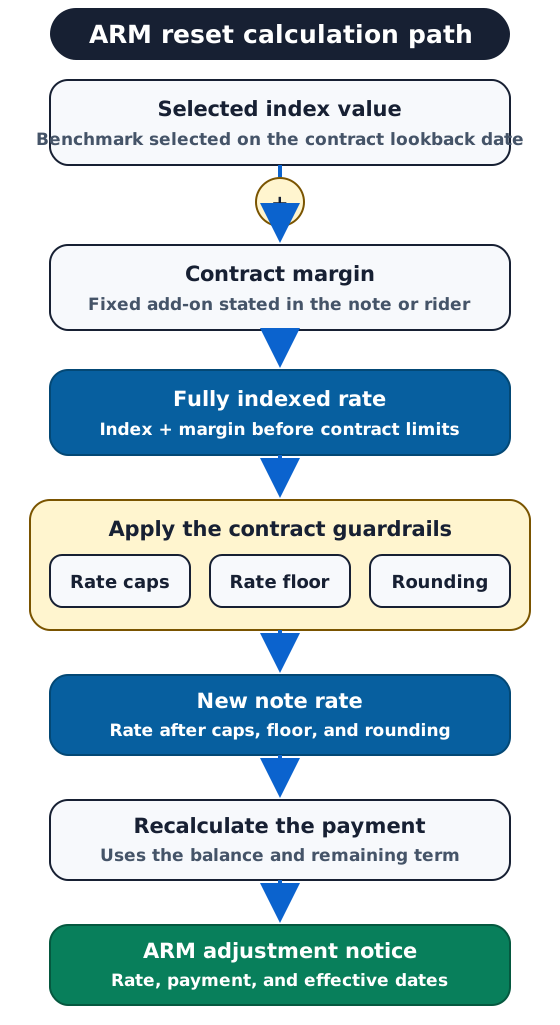
The index and margin produce a formula rate, but that number does not move directly onto the statement. The servicer applies the note’s lookback method, rounding, cap, floor, and lifetime maximum to determine the new note rate. The payment is then recalculated using the outstanding balance, remaining amortization, and other applicable loan terms.
Reconstruct a Reset
Use the adjustment notice and closing documents to check the sequence:
- Confirm the index name, source, and value date.
- Add the contractual margin to reproduce the fully indexed rate.
- Compare that result with the prior note rate and applicable cap.
- Check the floor, lifetime maximum, and rounding convention.
- Verify the effective date and first payment at the adjusted level.
If the arithmetic does not reconcile, ask the servicer for a written explanation before assuming the index value or payment calculation is wrong. The difference may come from the lookback date, contract rounding, or a cap.
Translate the Applied Rate Into the New Payment
The applied reset rate is only the first result. The servicer then recalculates principal and interest using the outstanding balance and remaining amortization under the note. That is why the payment effect cannot be estimated from the original loan amount alone.
| Reset input | Illustrative value |
|---|---|
| Balance at reset | $300,000 |
| Remaining amortization | 25 years |
| Prior note rate | 5.00% |
| Cap-limited new rate | 6.00% |
| Prior principal and interest | About $1,753.77 |
| New principal and interest | About $1,932.90 |
The approximate increase is $179.13 per month before any escrow change. Confirm the rate-effective date and the first payment due at the adjusted amount; those dates may not be the same. Keep the notice with the note and rider so the next reset can be compared with the same contract sequence.
Practical Example
A borrower reaches the first reset on a 5/1 ARM. The selected index is 4.00% and the margin is 2.75 points, producing a 6.75% fully indexed rate. The current rate is 5.00%, but the initial cap permits only a 1-point increase, so the new note rate is limited to 6.00% before the payment is recalculated. The next notice communicates that applied result, not merely the 6.75% formula rate.
How It Differs From Nearby Terms
ARM reset differs from the Initial Fixed-Rate Period because the fixed period is the stable phase before changes are allowed, while the reset is the later event when the rate can actually change.
It also differs from Adjustment Period. The adjustment period describes the repeating schedule of possible resets, while ARM reset is a specific review and pricing event on one of those dates.
It also differs from Fully Indexed Rate. The fully indexed rate is the formula result concept, while the reset is the real-world moment when that formula and the contract guardrails start affecting the borrower’s live loan.
It also differs from ARM Adjustment Notice. The reset is the internal pricing event, while the notice is the borrower-facing document that communicates the outcome before the payment change takes effect.
Related Terms
- Adjustable-Rate Mortgage (ARM)
- Initial Fixed-Rate Period
- Adjustment Period
- ARM Adjustment Notice
- Index Rate
- Margin
- Fully Indexed Rate
- Rate Cap
Knowledge Check
- Why is an ARM reset such an important borrower milestone? Because it is the point when the ARM formula can start changing the actual contract rate and payment.
- Is an ARM reset just another name for the adjustment period? No. The adjustment period is the schedule, while the reset is the specific pricing event on one of those scheduled dates.
- Why can two borrowers receiving the same adjusted rate have different payments? Their outstanding balances and remaining amortization periods may differ when the reset occurs.