Insurance Loss Draft
An insurance loss draft is a claim-payment check or draft that may require both the homeowner and mortgage servicer to endorse it before repair funds are released.
An insurance loss draft is a check or similar payment instrument issued for a covered property claim that may name both the homeowner and the mortgage lender or servicer as payees.
Why It Matters
An insurance loss draft matters because the borrower may not be able to deposit a jointly payable claim check like an ordinary personal check. The mortgage company has a financial interest in the home, so its endorsement or claim-handling process may be required before structural-damage funds can be used.
That process can surprise homeowners who expected the insurer’s check to be immediately available. Depending on the claim, loan status, investor requirements, and servicer procedures, the money may be released at once or held and paid out as repairs progress.
A single claim can produce several loss drafts. The insurer may issue an initial payment, a supplemental payment after accepting additional damage or cost, and a Recoverable Depreciation payment after qualifying repairs. A mortgage company named on each check may need to process each one.
The loss-draft process does not ordinarily replace the borrower’s regular mortgage obligation. Claim administration and monthly mortgage payments are separate account matters unless the servicer has approved a different payment arrangement.
Where It Appears in the Borrower Process
Borrowers usually encounter an insurance loss draft after closing, when fire, wind, water, or another covered event damages the mortgaged property. The insurer evaluates the claim and issues payment under the policy.
If the mortgage company is named on the draft, the borrower generally contacts the servicer’s Loss Draft Department for endorsement and release instructions. Larger or more complex claims may move through an Insurance Repair Escrow with staged Repair Draws.
Typical Loss-Draft Flow
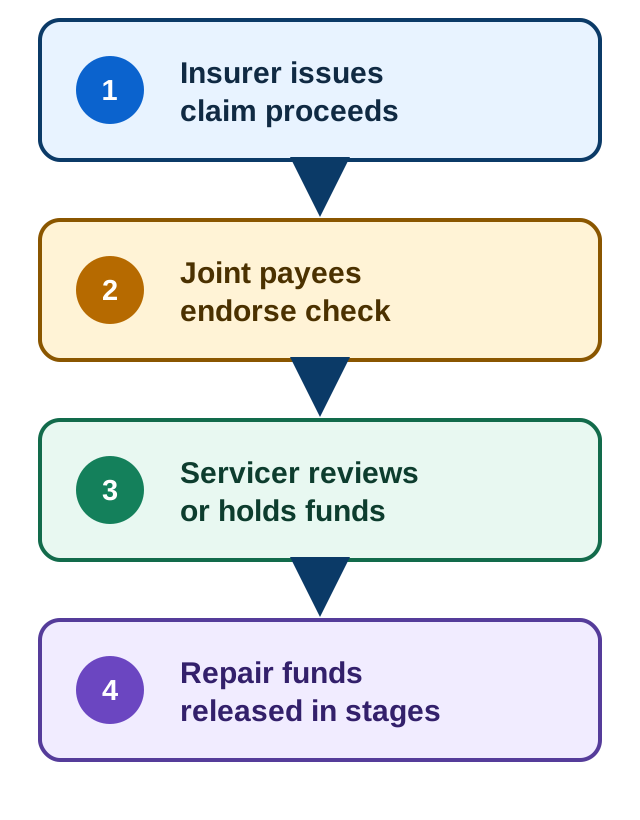
The exact documents and release schedule vary. The diagram shows the common relationship among the claim payment, joint endorsement, servicer review, and repair funding rather than a guaranteed sequence for every loan.
What Usually Determines the Next Step
| Factor | Why it can affect handling |
|---|---|
| Payees shown on the draft | A Joint-Payee Insurance Check may require multiple endorsements |
| Purpose of the proceeds | Money for structural repairs may be handled differently from funds for personal property or living expenses |
| Claim-payment stage | Initial, supplemental, and recoverable-depreciation checks may arrive at different times |
| Size and severity of the loss | A larger repair project is more likely to involve staged releases and inspections |
| Mortgage account status | Servicer or investor procedures may differ when the loan is delinquent |
| Repair progress | An Insured-Loss Repair Inspection may support a later draw |
Practical Example
A storm damages a home’s roof and interior. The insurer issues an initial structural-damage check payable to both the homeowner and mortgage servicer. The homeowner submits the draft and claim documents to the servicer. Part of the money is released for initial work. After the roof is replaced, the insurer issues a second check for eligible recoverable depreciation, and that check also goes through the loss-draft process.
How It Differs From Nearby Terms
An insurance loss draft differs from Insurance Loss Proceeds. The draft is the check or payment instrument; the proceeds are the money paid on the claim.
It differs from a Joint-Payee Insurance Check because joint-payee describes whose names appear on the payment, while loss draft describes the claim-payment instrument and servicing process more broadly.
It also differs from an Insurance Repair Escrow. The draft brings funds into the process; the repair escrow is where unreleased structural-repair proceeds may be held while work continues.
Related Terms
- Insurance Loss Proceeds
- Joint-Payee Insurance Check
- Loss Draft Department
- Insurance Repair Escrow
- Repair Draw
- Insured-Loss Repair Inspection
- Recoverable Depreciation
- Mortgagee Clause
Knowledge Check
- Why might a homeowner be unable to deposit an insurance loss draft immediately? The draft may also name the mortgage company, requiring its endorsement and claim-handling steps before the funds are available.
- Is an insurance loss draft the same as an insurance repair escrow? No. The draft is the claim-payment instrument, while the repair escrow may hold unreleased proceeds during the repair project.