Electronic Note (eNote)
Electronically signed mortgage promissory note managed as a transferable record rather than as an original paper note.
An electronic note, or eNote, is a mortgage promissory note created and signed electronically and managed as a transferable electronic record rather than as an original paper note.
An eNote is not merely a scan or PDF copy of a paper note. Its electronic system must distinguish the authoritative copy and reliably show who has control of it.
Why It Matters
The note is the borrower’s signed promise to repay. When that note is electronic, the mortgage industry needs a reliable way to identify the controlling record, prevent an ordinary copy from being mistaken for the original, and document later transfers.
For the borrower, the basic debt does not change just because the note is electronic. The principal, interest terms, payment schedule, default provisions, and maturity still come from the signed note. What changes is how the original record is created, stored, controlled, and transferred after closing.
An eNote also determines whether a digital closing produces an eMortgage. A closing can include electronic disclosures and signatures without producing an eMortgage if the promissory note remains paper.
Where It Appears in the Borrower Process
Borrowers usually encounter eNote language during final signing. The lender or settlement provider may explain that the note will be signed electronically while some other documents remain paper.
After execution, the eNote is commonly stored in an electronic vault, or eVault. Industry registry records can identify the party with control and the system location of the authoritative copy. Those back-office records support later delivery, custody, servicing, sale, payoff, or enforcement processes.
The borrower normally continues dealing with the Mortgage Servicer for statements and payments. Electronic control of the note does not make the registry operator or storage provider the servicer.
Paper Note and eNote Compared
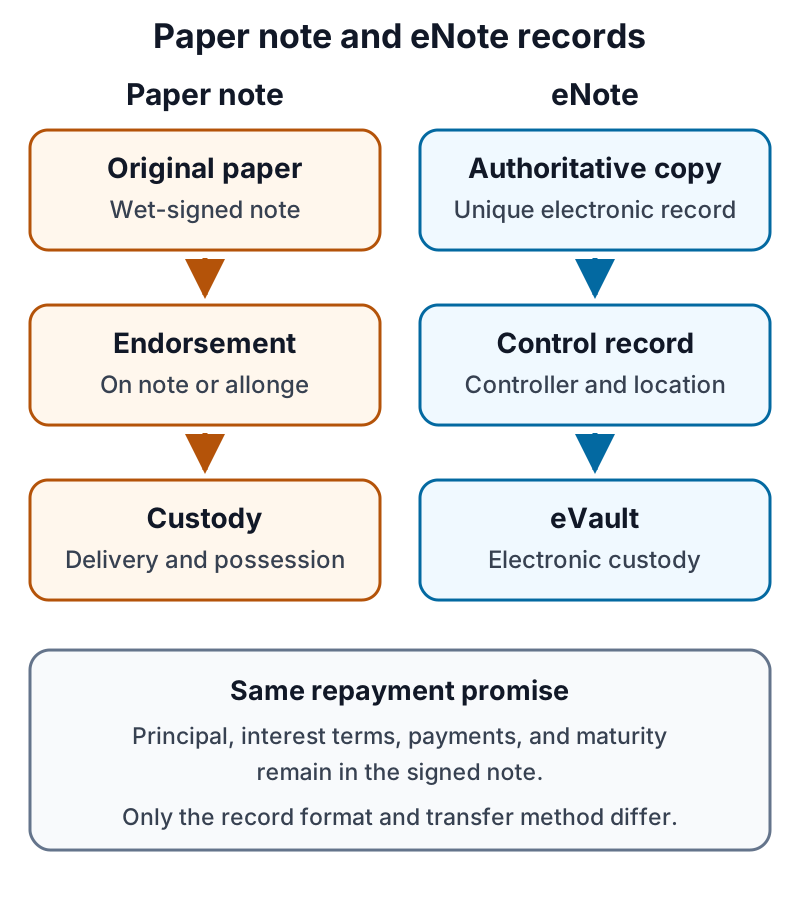
| Feature | Paper mortgage note | eNote |
|---|---|---|
| Original record | Signed paper original | Unique authoritative electronic copy |
| Transfer evidence | Delivery, Note Endorsement, and sometimes an Allonge | Electronic control and transfer records |
| Storage | Physical document custody | eVault or compatible electronic custodial system |
| Ordinary copy | Copy is not the original note | Copy is identifiable as non-authoritative |
| Borrower’s promise | Repayment terms stated in the note | Same core repayment function |
The exact legal and custodial process depends on the applicable law and transaction channel. The practical distinction is that paper-note rights rely on the paper instrument and its transfer history, while eNote rights rely on a controlled authoritative electronic record.
Key Electronic-Record Terms
| Term | Plain-language role |
|---|---|
| Authoritative copy | The unique electronic copy treated as the controlling note record |
| Control | Electronic equivalent of the status used to establish who can exercise holder rights |
| Location | The system or custodian maintaining the authoritative copy |
| eVault | Technology used to store and manage eNotes and related records |
| MERS eRegistry | Industry system of record commonly used to identify eNote control and location |
These terms describe electronic note administration. They should not be confused with the MERS System, which tracks servicing-right and beneficial-ownership information for registered mortgage loans.
Practical Example
A borrower completes a hybrid closing. Most disclosures are signed online, the security instrument is printed and signed in ink, and the promissory note is signed electronically.
Because the promissory note is an eNote, the loan is an eMortgage even though the security instrument remains paper. The eNote is placed in an eVault, registered, and later transferred through electronic control records. The borrower’s payment obligation remains the amount and terms stated in the note.
How It Differs From Nearby Terms
An eNote differs from Mortgage Note because mortgage note describes the repayment document generally; eNote describes its electronic form and control framework.
It differs from Electronic Signature because an electronic signature is a signing method used on many kinds of documents. An eNote is a particular signed mortgage instrument.
It differs from eMortgage because eNote is the electronic promissory note, while eMortgage describes the mortgage loan produced when that note is electronic.
It differs from a scanned note because a scan is ordinarily just an image copy. It does not by itself become the unique authoritative electronic record.
Related Terms
- eMortgage
- Mortgage Note
- Promissory Note
- Note Holder
- Electronic Signature
- Hybrid Closing
- MERS
- Note Endorsement
Knowledge Check
- Is a scanned image of a signed paper note automatically an eNote? No. An eNote is created and managed as a transferable electronic record with an identifiable authoritative copy.
- Does an eNote change the borrower’s principal, rate, or payment promise? No. It changes the note’s format and transfer framework, not the agreed repayment terms.
- Does any closing with electronic signatures produce an eMortgage? No. The promissory note itself must be electronically signed for the loan to be an eMortgage.