Hybrid ARM
Adjustable-rate mortgage with an opening fixed-rate phase followed by scheduled rate adjustments.
A hybrid ARM is an adjustable-rate mortgage that begins with a fixed interest rate for a stated number of years and then moves into an adjustable phase. Common labels such as 5/1, 7/6, and 10/6 describe the timing of those two phases.
Why It Matters
The hybrid structure gives a borrower short- or medium-term rate stability without fixing the rate for the entire mortgage term. That can produce a lower initial rate than some fixed-rate offers, but it also creates a future point when the rate and principal-and-interest payment can change.
The opening period may align with a planned sale or refinance. That plan is not guaranteed. Changes in home value, credit, income, market rates, or closing costs can make the expected exit unavailable. A borrower should therefore evaluate both phases of the contract before choosing the opening rate.
Hybrid ARM does not mean the same thing as a discounted or teaser rate. Some hybrid ARMs may start below their fully indexed rate, while others may not. The hybrid label describes when the rate is fixed and adjustable; it does not describe whether the opening rate is discounted.
Where It Appears in the Borrower Process
Borrowers encounter hybrid ARMs during rate shopping and in the lender’s ARM program disclosure. The Loan Estimate identifies the adjustable-rate product and summarizes potential changes. The note and ARM rider establish the exact first adjustment date, index, margin, caps, floor, and payment-change rules.
The process has three practical stages:
- Compare the opening phase. Review the initial rate, payment, points, lender credits, and length of rate stability.
- Stress-test the transition. Estimate the first adjusted rate and payment under the index, margin, and initial cap.
- Understand the recurring phase. Review how often later resets can occur and how the periodic and lifetime caps constrain them.
How Hybrid ARM Labels Work
| Label | Initial fixed-rate period | First later adjustment interval |
|---|---|---|
| 3/1 ARM | 3 years | 1 year |
| 5/1 ARM | 5 years | 1 year |
| 5/6 ARM | 5 years | 6 months |
| 7/1 ARM | 7 years | 1 year |
| 7/6 ARM | 7 years | 6 months |
| 10/1 ARM | 10 years | 1 year |
| 10/6 ARM | 10 years | 6 months |
The first number does not state the loan term. A 10/6 ARM can still have a 30-year repayment schedule. The second number does not state how many percentage points the rate can move. It states an interval; the caps control the permitted change.
Product shorthand is not a substitute for the signed documents. The Loan Estimate’s product label emphasizes the introductory period and first adjustment interval, while the legal obligation controls the complete schedule.
Fixed Phase to Adjustable Phase
The following 7/6 example shows the transition. Years one through seven use the opening note rate. After that, the contract uses the index and margin at each eligible reset, then applies caps, a floor, and rounding rules before establishing the new note rate and payment.
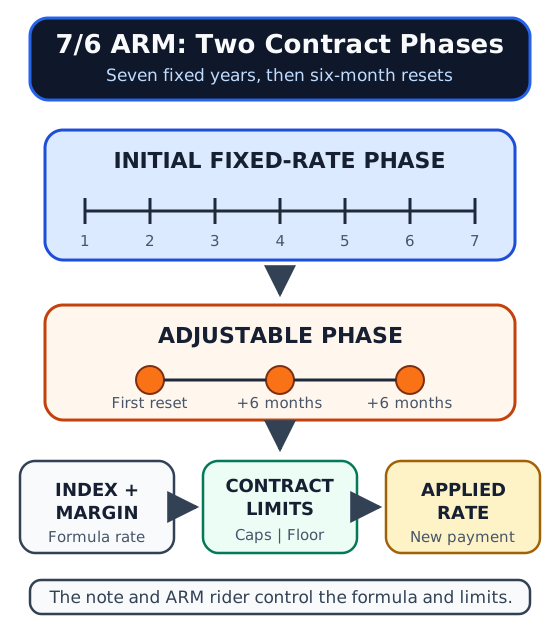
An adjustment opportunity does not guarantee a change. The calculated and applied rate can rise, fall, or remain the same. Taxes, insurance, mortgage insurance, and escrow amounts can also change independently during either phase.
Terms the Label Does Not Show
| Contract term | Borrower question |
|---|---|
| ARM Index Rate | Which market benchmark can move? |
| ARM Margin | How many percentage points are added to the index? |
| Initial Adjustment Cap | How far can the first reset move from the opening rate? |
| Periodic Adjustment Cap | How far can each later reset move? |
| Lifetime Rate Cap | What is the highest permitted rate? |
| ARM Rate Floor | How low is the rate allowed to fall? |
Two loans with the same 7/6 label can behave differently because these terms can differ. Compare the complete product, not just the two-number name.
Practical Example
A borrower expects to remain in a home for six years and compares a 7/6 ARM with a 30-year fixed mortgage. The ARM’s initial rate is lower, and the planned sale falls inside the seven-year fixed phase.
The borrower also reviews a delayed-sale scenario. If the mortgage remains after year seven, the rate is recalculated from the contract index plus margin and limited by the initial cap. Six months later, another reset opportunity can occur under the periodic cap. By budgeting for both events, the borrower evaluates the contract rather than relying only on the moving plan.
How It Differs From Nearby Terms
A hybrid ARM is a subtype of Adjustable-Rate Mortgage (ARM). The broader ARM category can include other adjustable structures; hybrid identifies the opening fixed phase followed by adjustable periods.
It differs from a Fixed-Rate Mortgage because the fixed rate does not last for the full scheduled term. It differs from the Initial Fixed-Rate Period because that period is only the first phase of the hybrid ARM.
It also differs from a Temporary Buydown or 2-1 Buydown. A temporary buydown reduces scheduled payments during an opening period but does not by itself make the underlying note rate adjustable.
Related Terms
- Adjustable-Rate Mortgage (ARM)
- Fixed-Rate Mortgage
- Initial Fixed-Rate Period
- ARM Adjustment Period
- Fully Indexed Rate
- Initial Adjustment Cap
- Periodic Adjustment Cap
- ARM Adjustment Notice
Knowledge Check
- What makes an ARM a hybrid ARM? It combines an opening fixed-rate phase with a later adjustable-rate phase.
- Does the second number in a hybrid ARM label show how much the rate can increase? No. It shows an adjustment interval; the contract caps limit the size of rate changes.
- Why can two loans with the same hybrid ARM label behave differently? Their indexes, margins, caps, floors, costs, and exact dates can differ.