Loss Mitigation Application
Borrower request package used by a mortgage servicer to evaluate foreclosure-avoidance or workout options.
A loss mitigation application is information a mortgage borrower gives the servicer for evaluation of options that may resolve delinquency, reduce foreclosure risk, or provide another workout path.
An application can begin before every required document has arrived. It becomes a complete loss mitigation application when the servicer has received all borrower-controlled information it requires to evaluate the options available for that mortgage.
Why It Matters
The application is the practical entry point into a structured assistance review. A borrower may be seeking a repayment plan, payment deferral, modification, short sale, deed in lieu, or another option, but availability depends on the loan owner, insurer or guarantor, account status, property, and borrower circumstances.
Application status matters. Under federal servicing rules that apply to many mortgages, a servicer receiving an application at least 45 days before a scheduled foreclosure sale generally must promptly review it and send a written acknowledgment within five days, excluding weekends and legal public holidays. An incomplete notice identifies additional information needed and a reasonable response date.
When a covered servicer receives a complete application more than 37 days before a scheduled foreclosure sale, it generally must evaluate the borrower for the available loss-mitigation options and provide a written decision within 30 days. Timing, exceptions, prior applications, and the specific foreclosure stage can change which protections apply, so a borrower should not wait for a sale date to approach before submitting documents.
Complete does not mean approved. It means the file contains the information required for evaluation.
Where It Appears in the Borrower Process
Borrowers encounter the application after closing when the account is delinquent, at imminent risk of default, or approaching the end of temporary relief. A request may begin through a phone conversation, portal questionnaire, mailed form, or documents transferred from another servicer.
The process usually moves through these stages:
- Borrower asks for help and provides information used in an evaluation.
- Servicer records receipt and determines whether the application is complete.
- Borrower responds to any missing-items request and refreshes stale documents.
- Servicer evaluates the options available for that mortgage.
- Servicer communicates an offer, denial, request for more information, or other status.
- Borrower accepts, appeals when eligible, supplies more information, or considers another path.
The borrower should continue reading mortgage statements, foreclosure notices, and response deadlines while the application is pending. A review does not erase the delinquency or replace the need to follow written instructions.
Application Status Compared with Nearby Terms
| Term | Borrower-facing distinction |
|---|---|
| Loss mitigation application | Request package for workout review |
| Complete Loss Mitigation Application | Servicer has enough required information to evaluate |
| Incomplete Loss Mitigation Application | Servicer still needs missing materials |
| Loss Mitigation | Broader process and set of possible options |
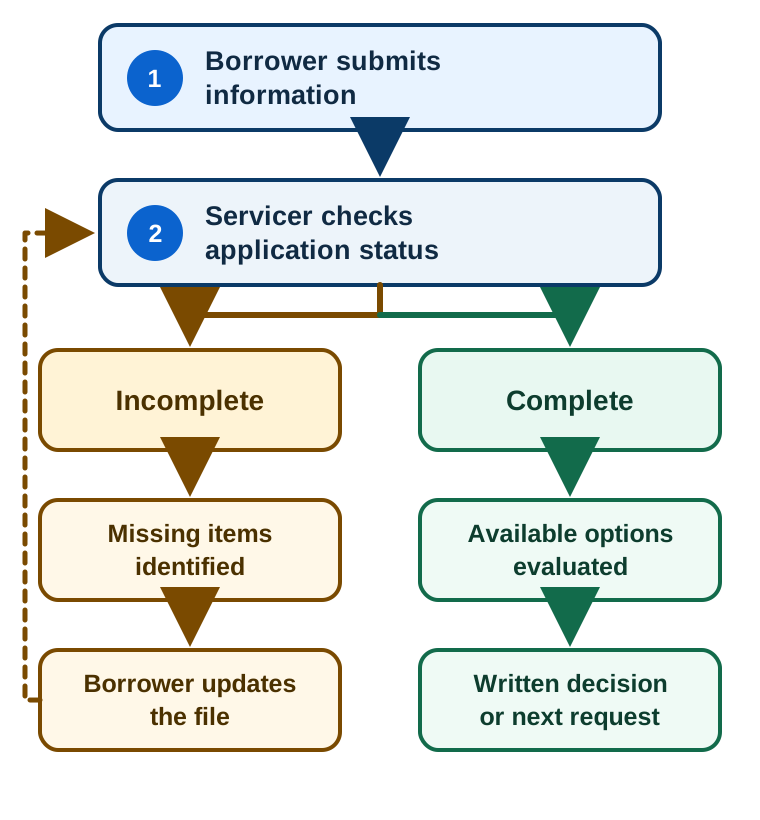
The diagram shows the status logic, not a guaranteed approval path. A servicer can request corrected or updated information during review, and an application previously described as complete may need follow-up documents.
Practical Example
Rosa falls behind after a reduction in household income. She calls the servicer, answers financial questions, and uploads a Borrower Assistance Package. The servicer acknowledges the application but identifies a missing bank-statement page and an unsigned hardship form.
Rosa supplies both items and receives written confirmation that the application is complete. The servicer then evaluates the options available for her loan and sends a decision explaining an offered payment deferral and the acceptance deadline.
Rosa’s first upload was still part of a loss mitigation application; it simply was not complete. The later complete status began the full evaluation but did not dictate which option the servicer would offer.
How to Track the Review
| Record to keep | Why it matters |
|---|---|
| Full copy of each submission | Shows exactly what the borrower provided |
| Portal confirmation, fax record, or delivery tracking | Helps establish receipt timing |
| Acknowledgment and missing-items notices | State the servicer’s current status and requested information |
| Call log with names and reference numbers | Helps reconcile later conversations |
| Offer or denial letter | States the decision, deadlines, and any appeal information |
| Foreclosure notices | Remain important even while assistance is under review |
How It Differs From Nearby Terms
A loss mitigation application is the information submitted for review. Loss Mitigation is the broader process and category of foreclosure-avoidance or workout options.
Borrower Assistance Package emphasizes the forms and documents assembled by the borrower. The regulatory idea of an application is broader and can begin once the borrower provides information the servicer would use for an evaluation.
Loan Modification changes loan terms and is one possible outcome. Forbearance temporarily pauses or reduces payments and can be another option or a stage before a full review.
Related Terms
- Loss Mitigation
- Borrower Assistance Package
- Hardship Letter
- Complete Loss Mitigation Application
- Incomplete Loss Mitigation Application
- Loan Modification
- Forbearance
Knowledge Check
- Is a loss mitigation application itself a loan modification? No. It is the request package used to evaluate possible options, including but not limited to modification.
- Does “complete” mean the borrower has been approved? No. It means the servicer has the required borrower-controlled information to evaluate available options.